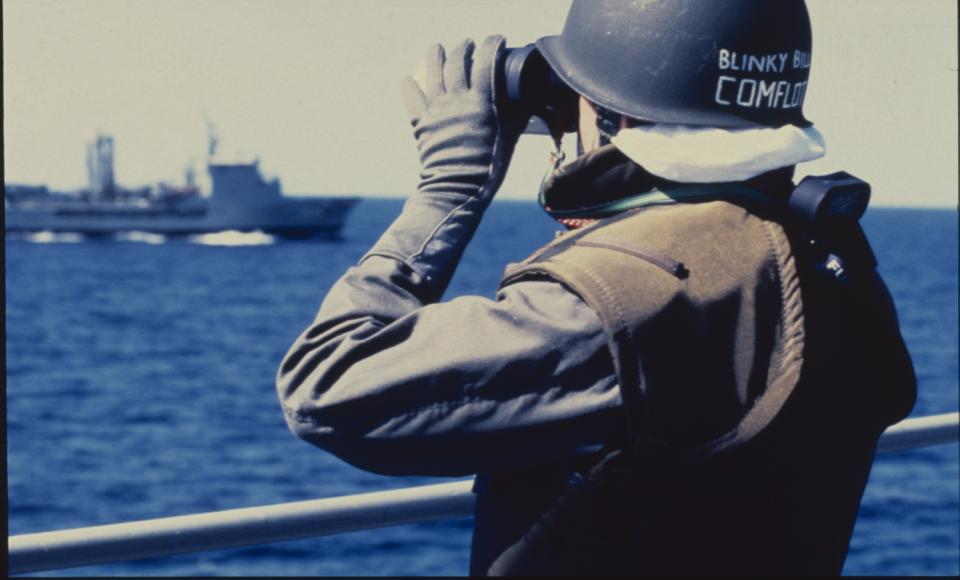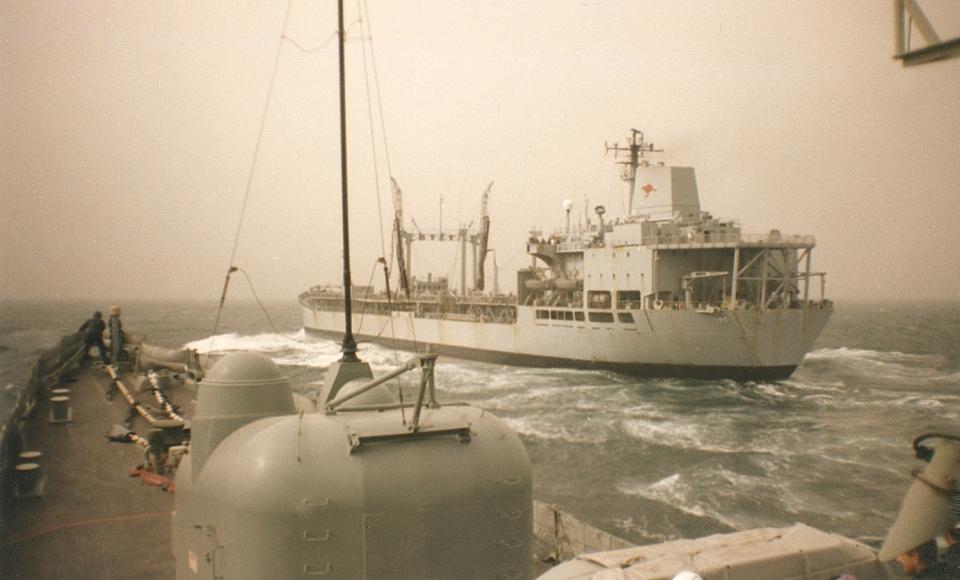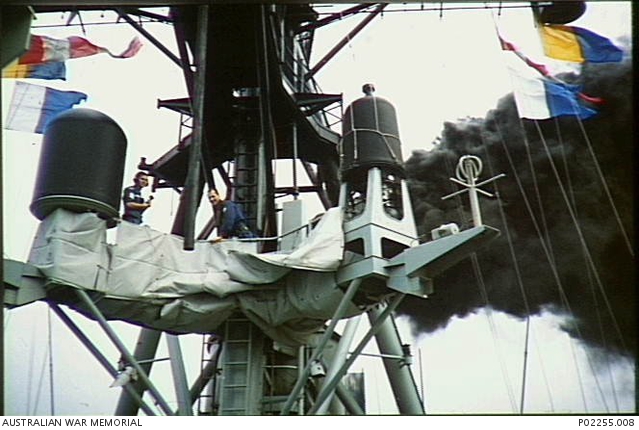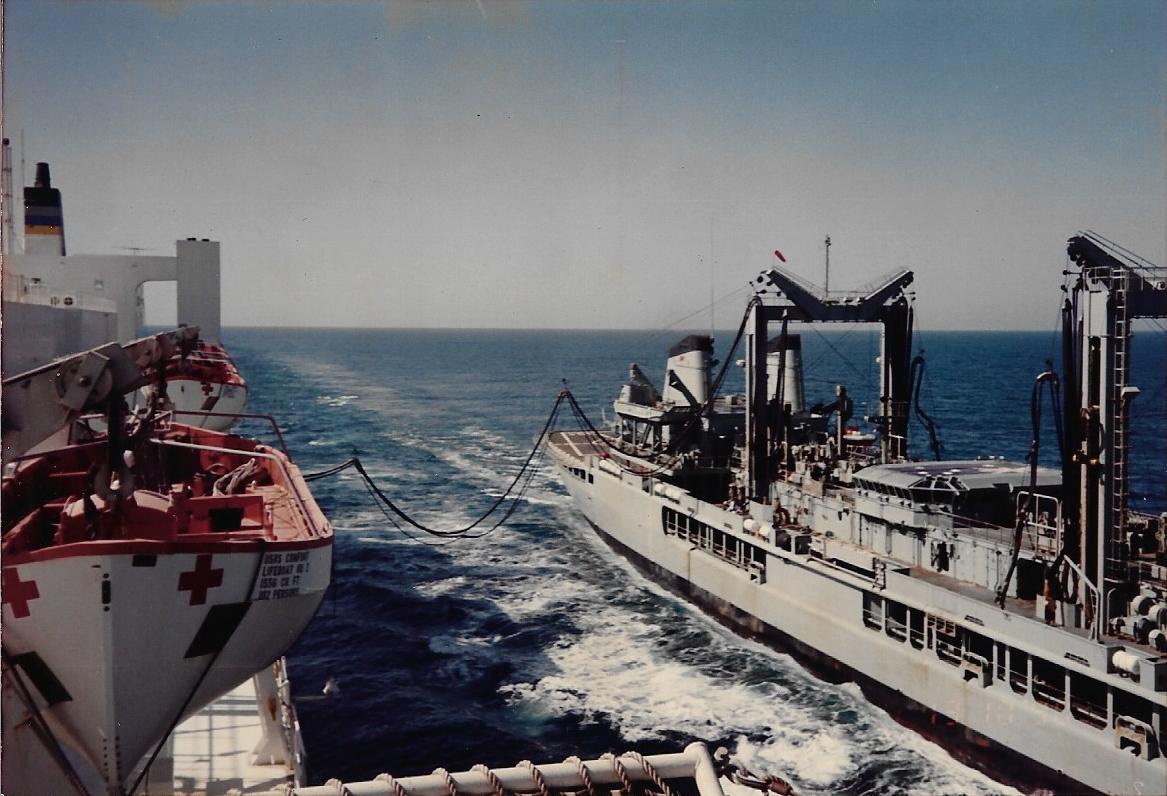
Commodore Flotillas (COMFLOT) and Australian Task Group Commander (CTG), Commodore Don Chalmers, RAN, keeps an eye on proceedings while embarked in HMAS Brisbane. HMAS Success can be seen in the background.
Image courtesy of the Department of Defence / Defence Image Gallery
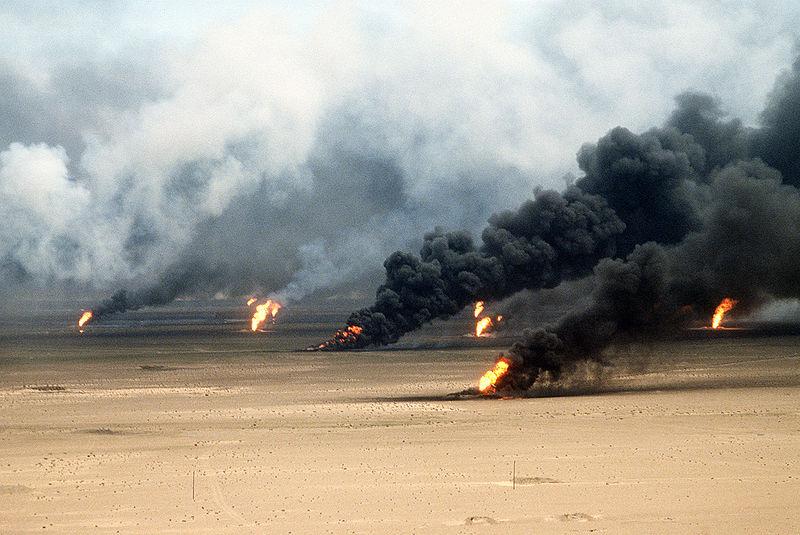
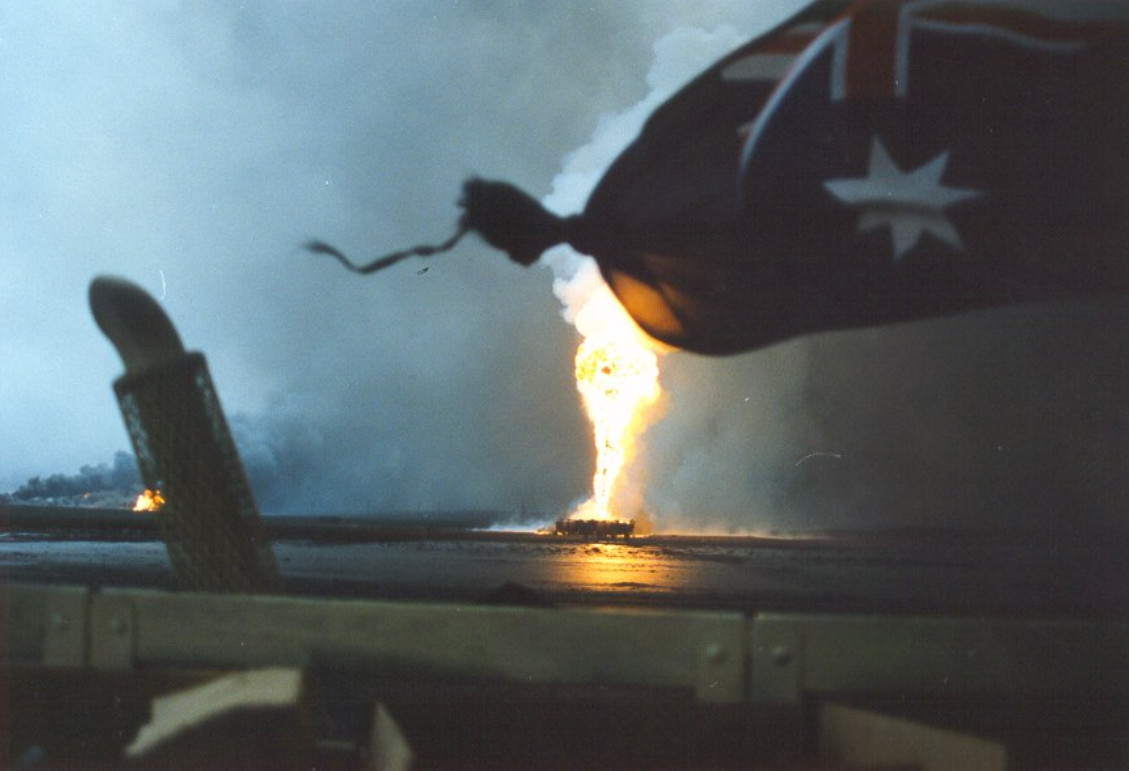
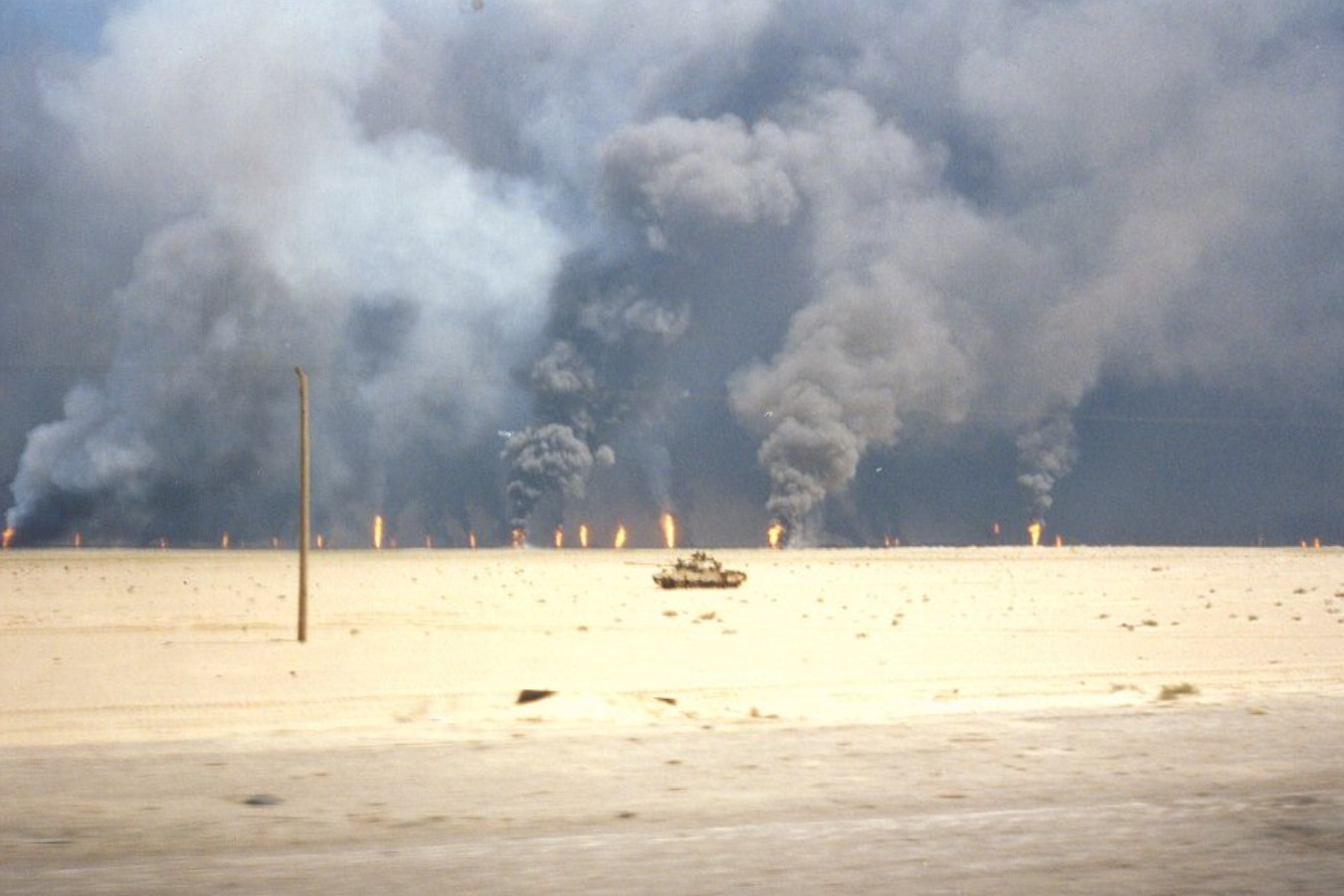
Kuwaiti oil wells burn following the Iraqi withdrawal from Kuwait in February 1991. Photographer Sgt David McLeod, US Department of Defense, Wiki Commons
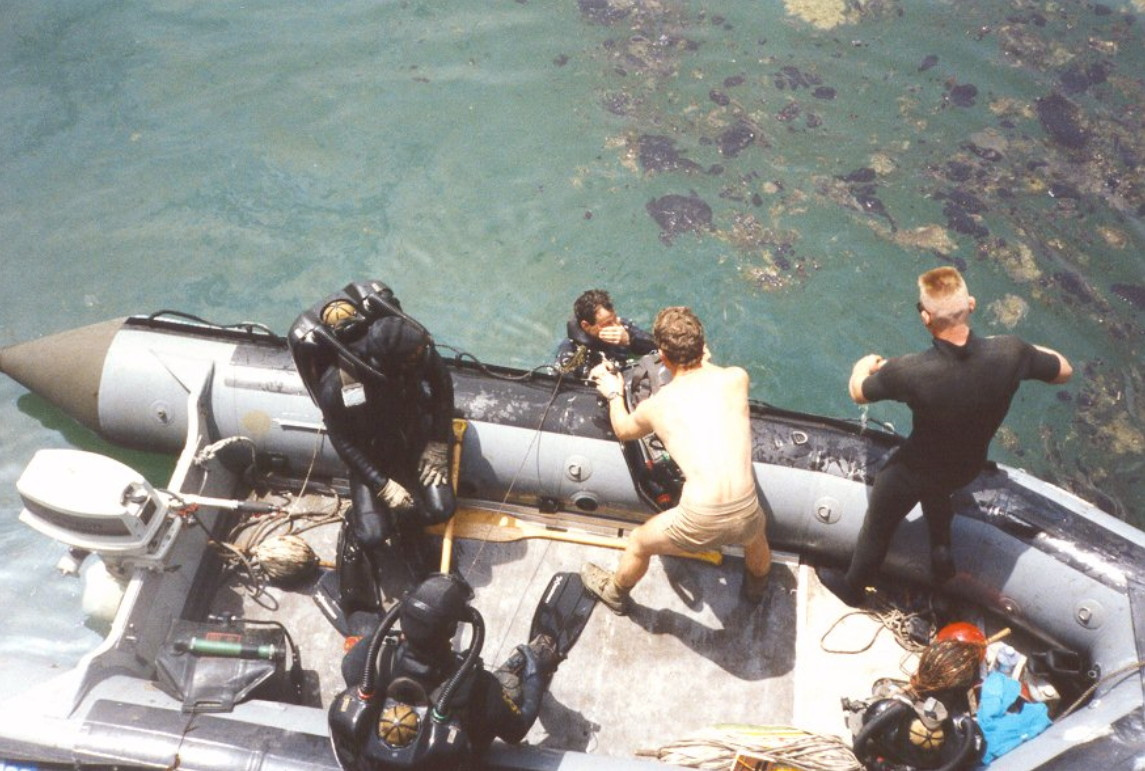
Members of Australian Clearance Diving Team 3 recover a diver from oil soaked waters during Operation Damask. *** Local Caption *** On 2 August 1990 Iraq invaded its neighbour Kuwait. Four days later the UN Security Council unanimously approved a trade embargo against Iraq. The Security Council set 15 January 1991 as the deadline for an Iraqi withdrawal from Kuwait, which was ignored by Iraq. The result was a full-scale war (known as Operation Desert Storm) when Coalition forces began air strikes on Iraqi military targets in Kuwait and the Iraqi capital, Baghdad. On 24 February 1991 the Coalition moved ground forces against Iraqi positions in Kuwait. Two days later Iraqi forces began to withdraw from Kuwait, setting fire to more than 600 Kuwaiti oil wells and dumping millions of barrels of crude oil into the Persian Gulf. Iraqi forces were expelled from Kuwait, and a ceasefire declared on 28 February 1991.
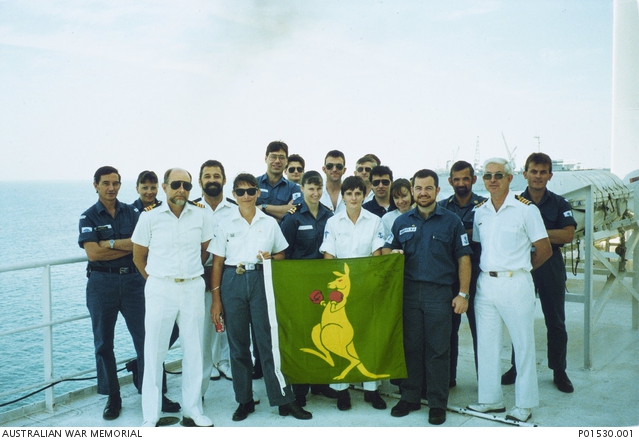
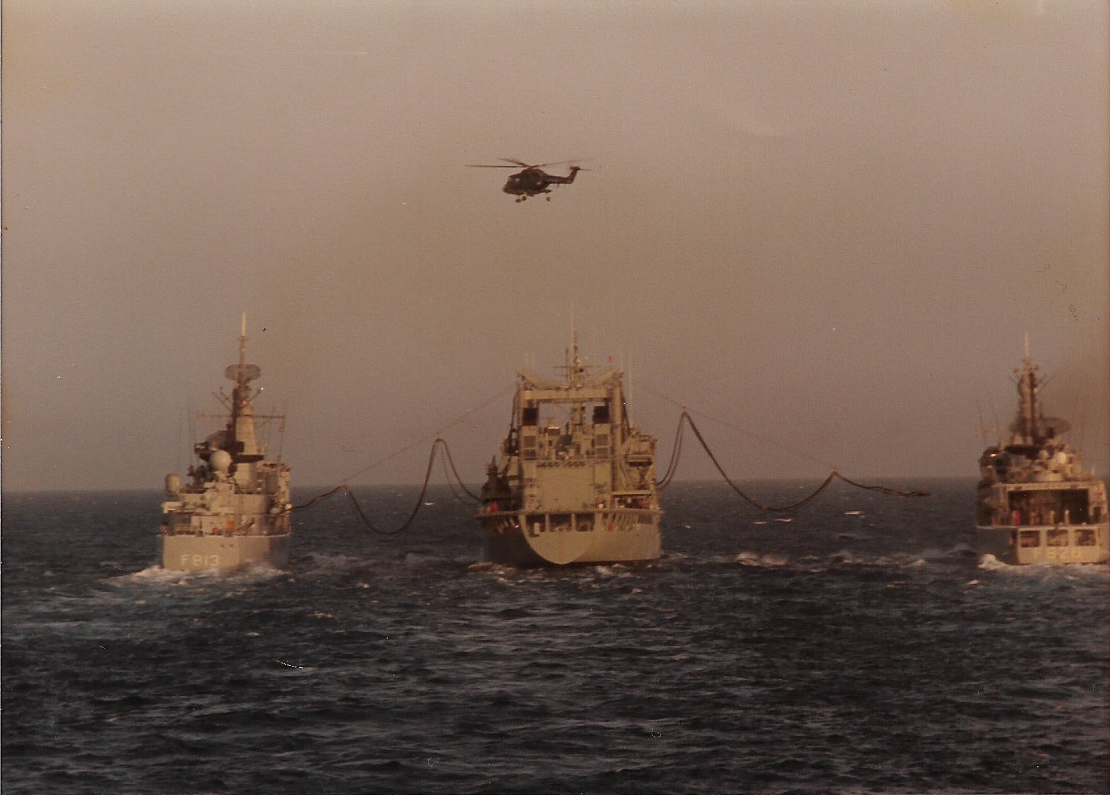
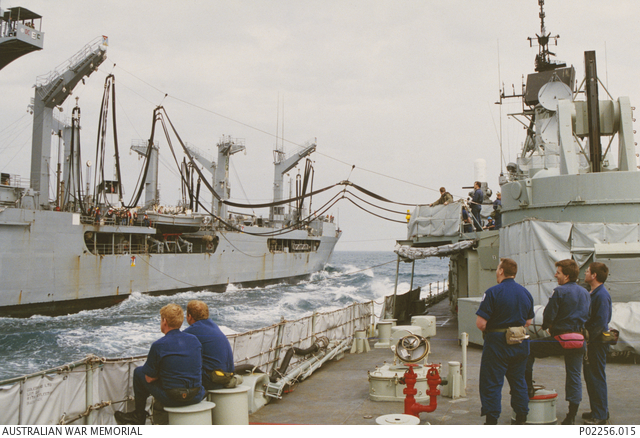
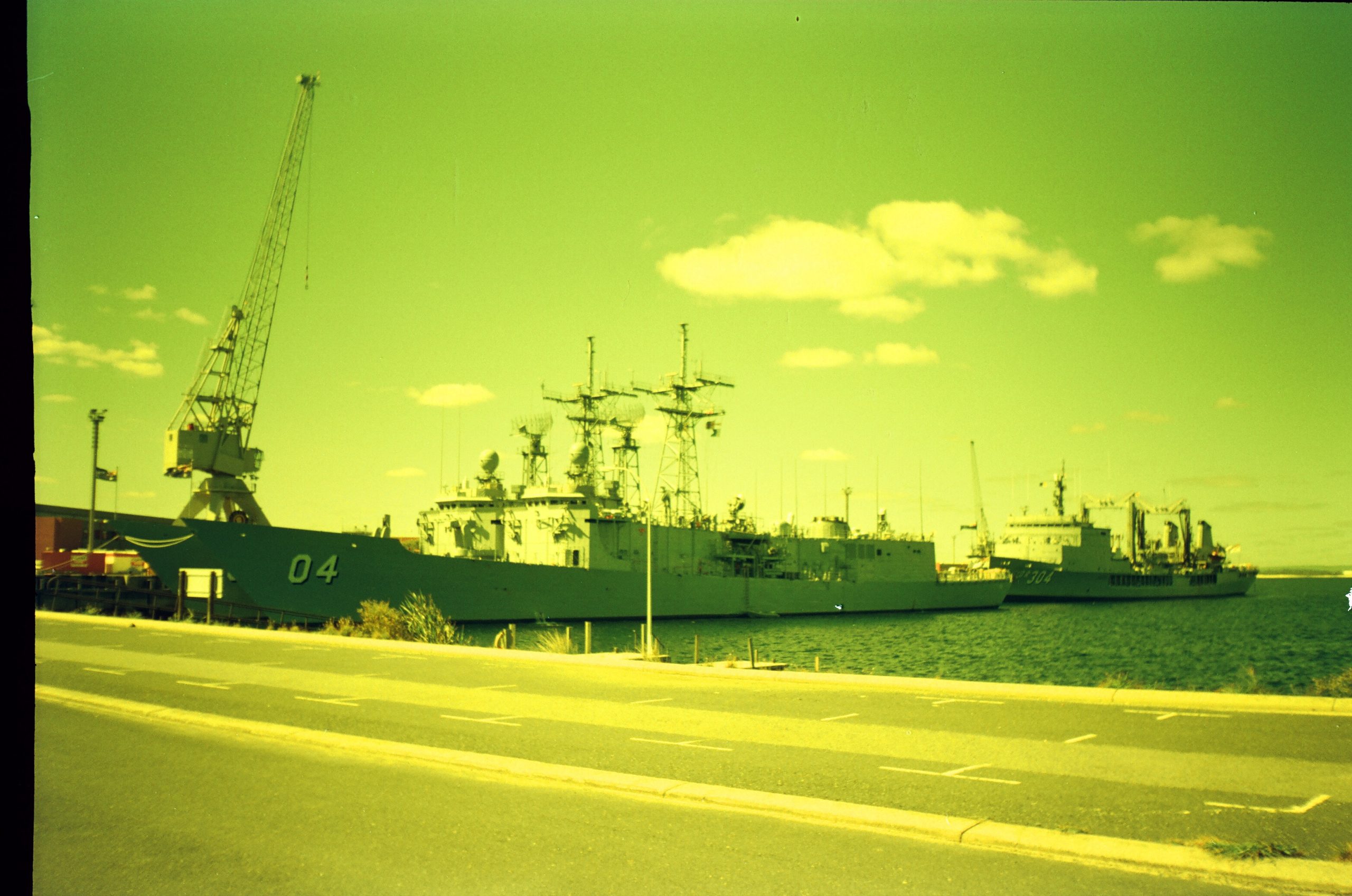
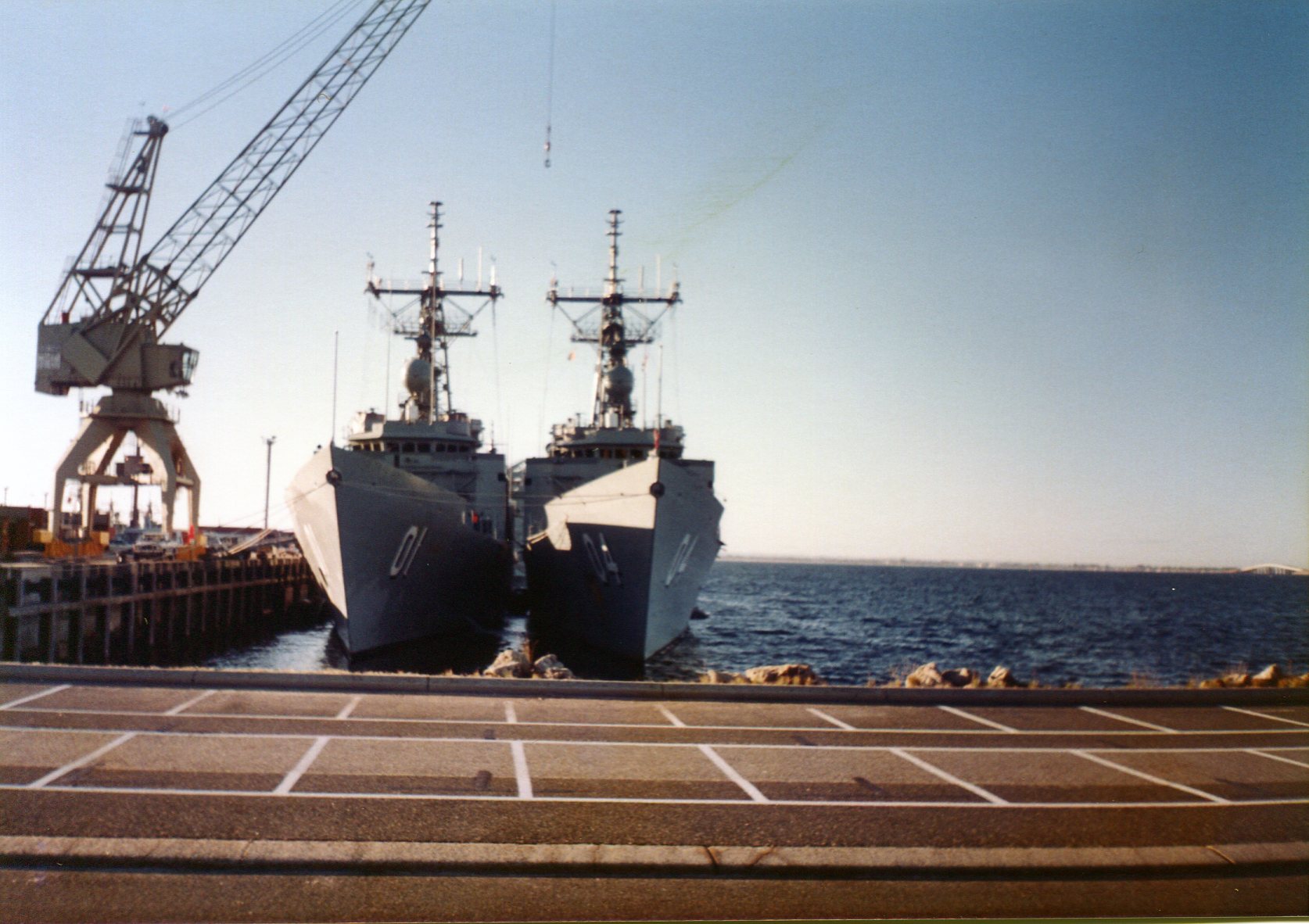
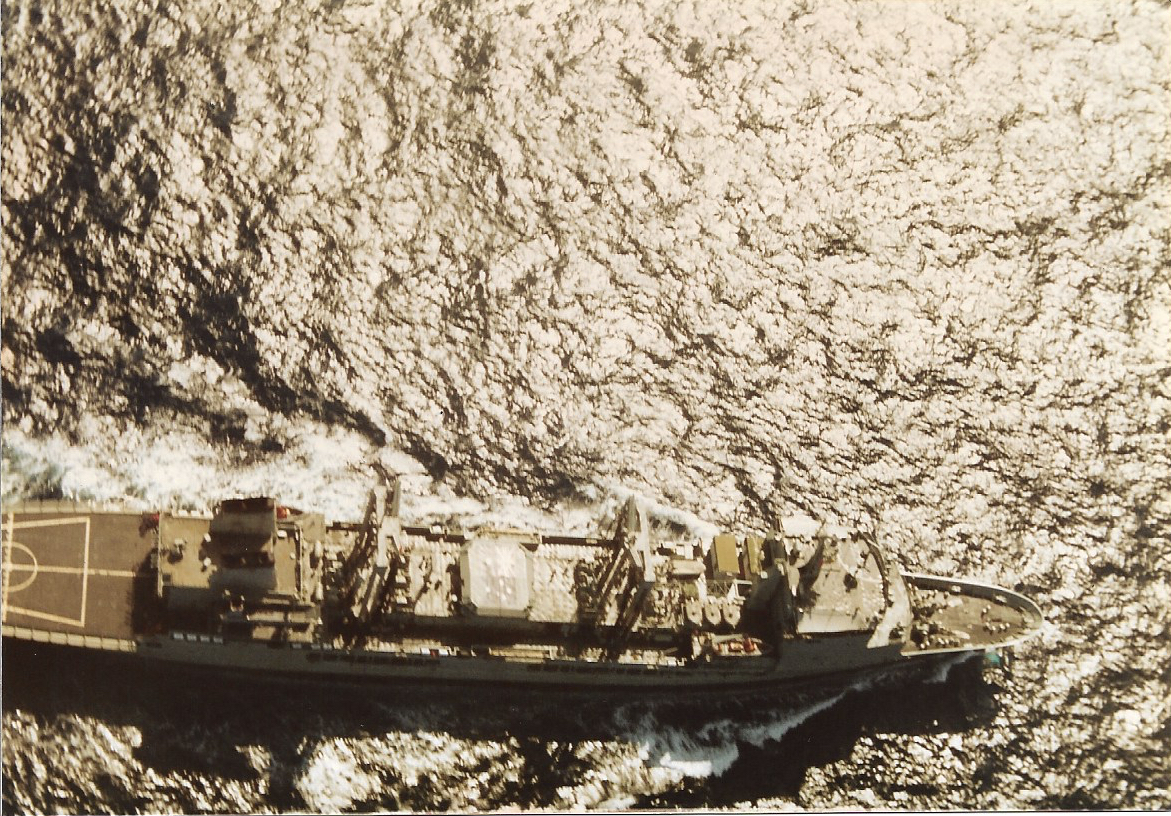
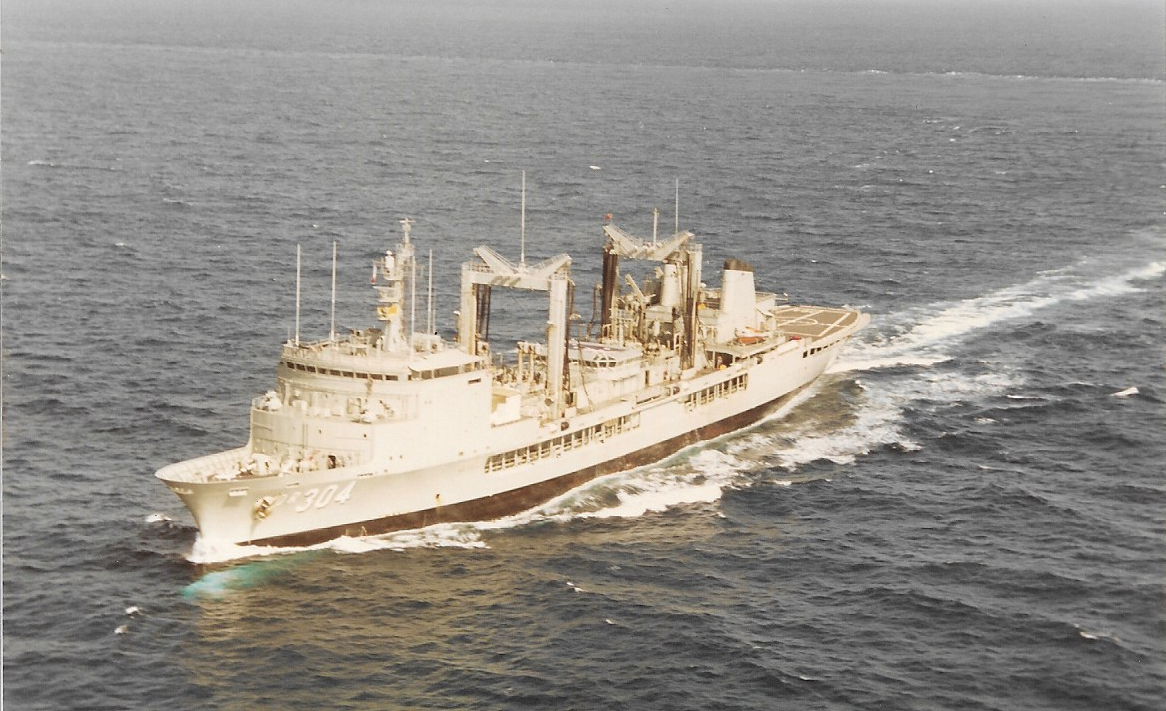
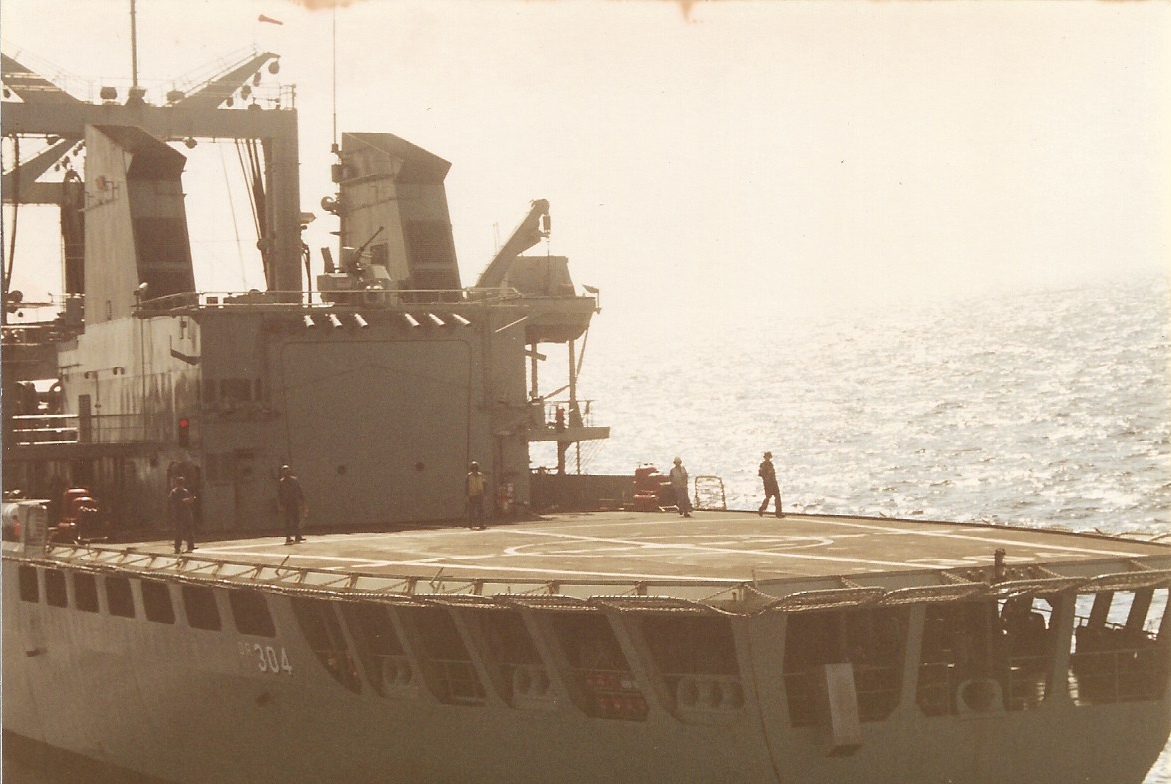
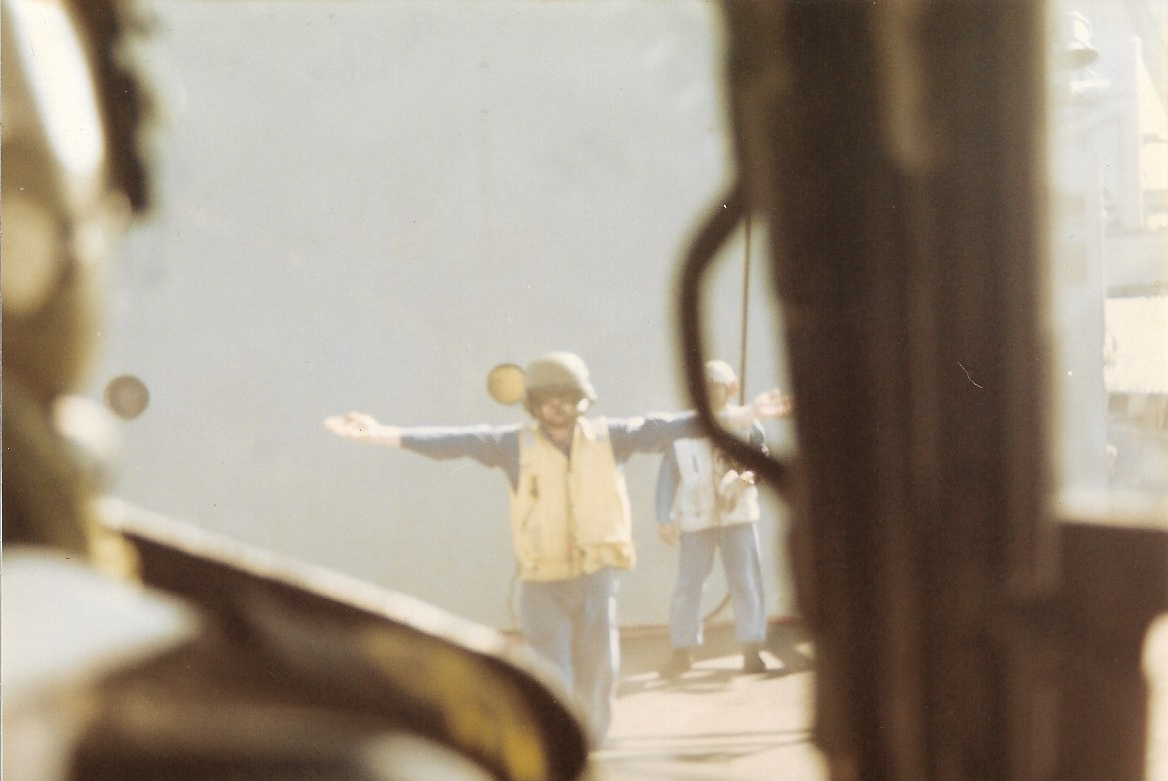
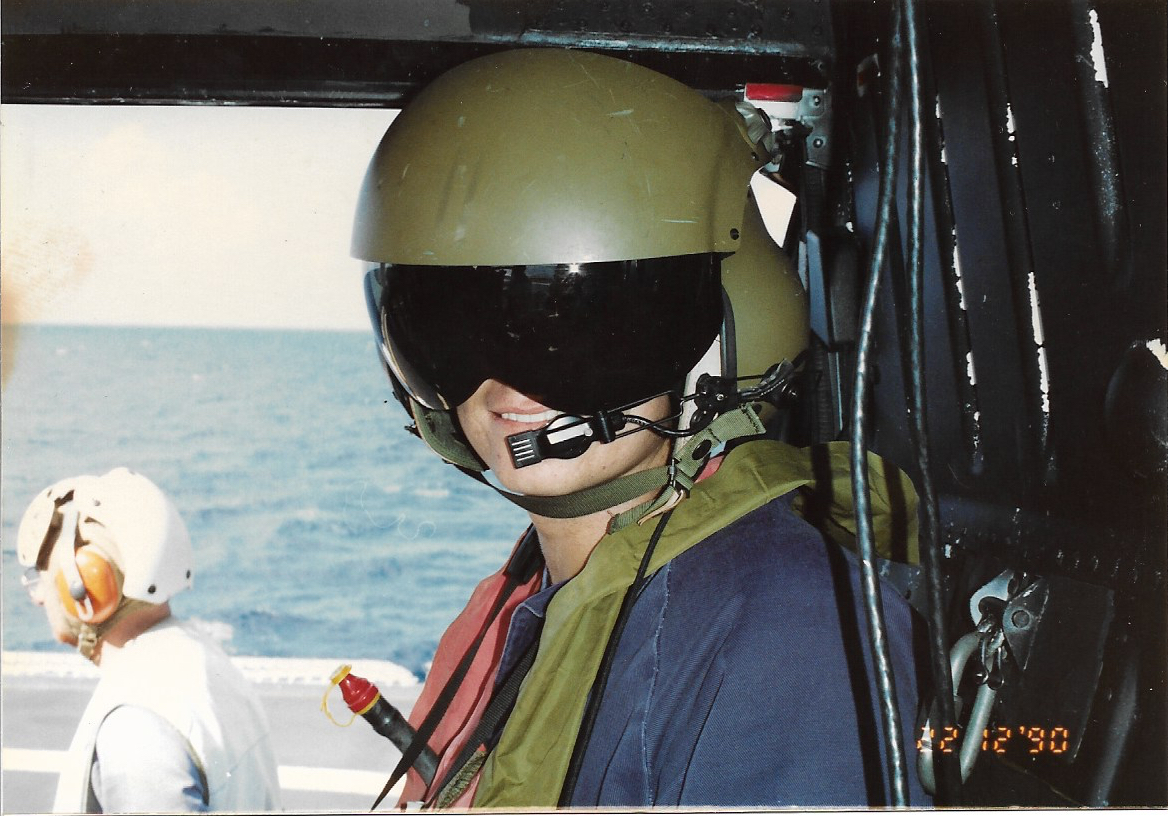
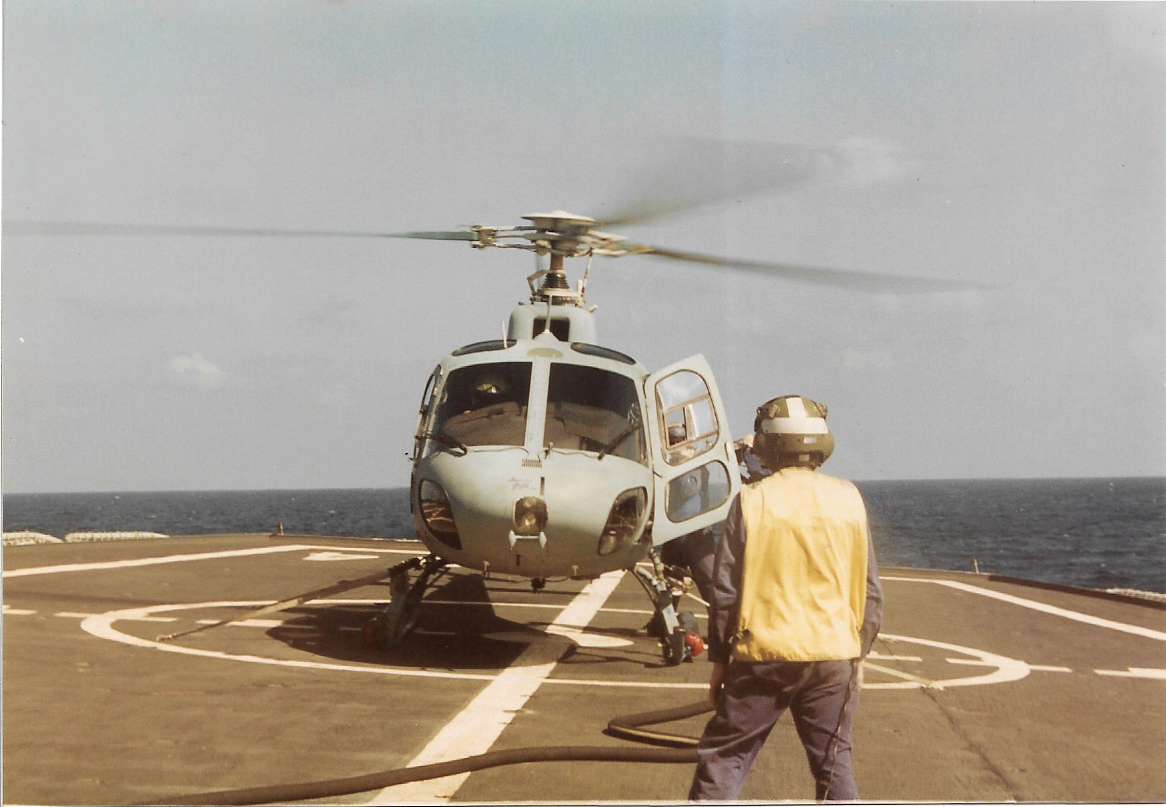
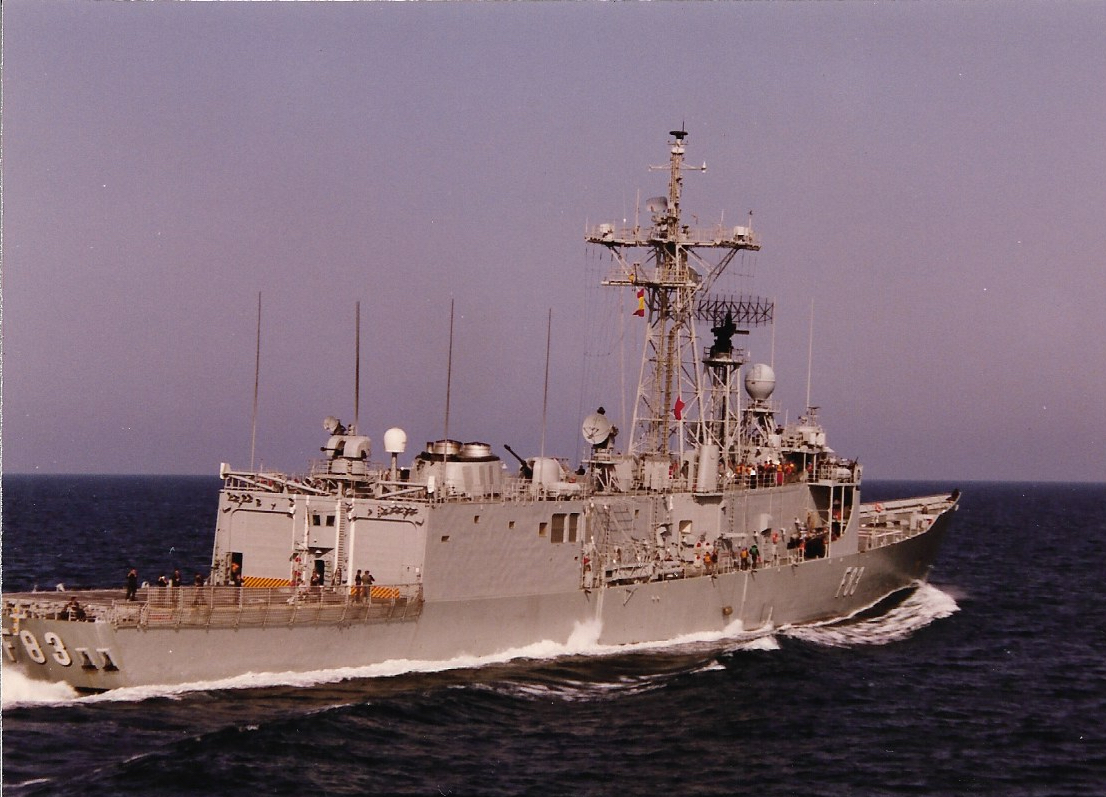
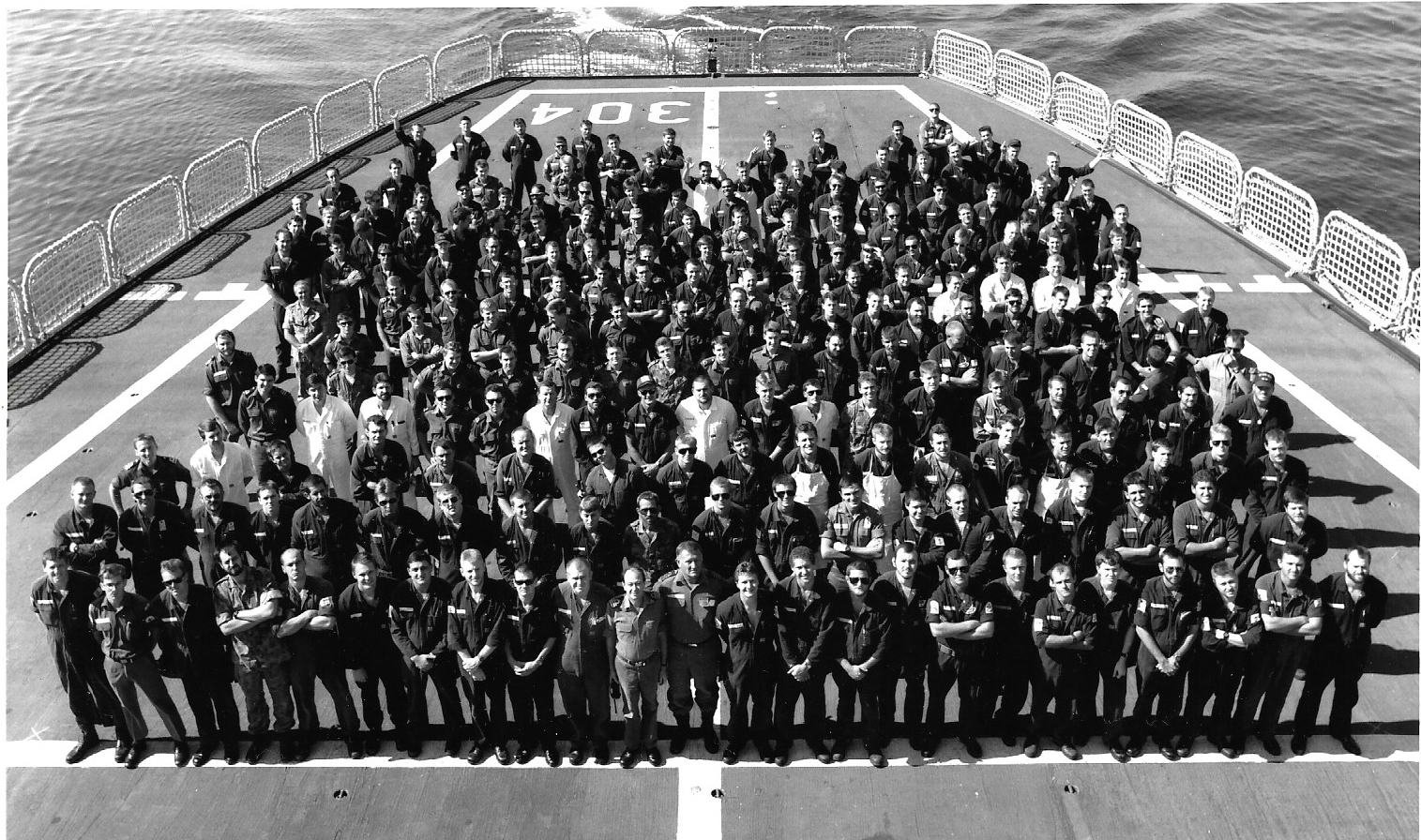
The main Australian contribution to the conflict was through a three-ship RAN task force that deployed to the region in August 1990 to enforce the UN sanctions against Iraq in the Persian Gulf and neighbouring waters. Under Operation Damask the first rotation of RAN warships were the Adelaide-class guided missile frigates HMAS Adelaide (II) and Darwin (I) and the replenishment oiler HMAS Success. In December 1990 the two RAN frigates were replaced by the Perth-class guided missile destroyer HMAS Brisbane (II) and the frigate HMAS Sydney (IV) which were on-station at the commencement of Operation Desert Storm in the early hours of 17 January 1991.
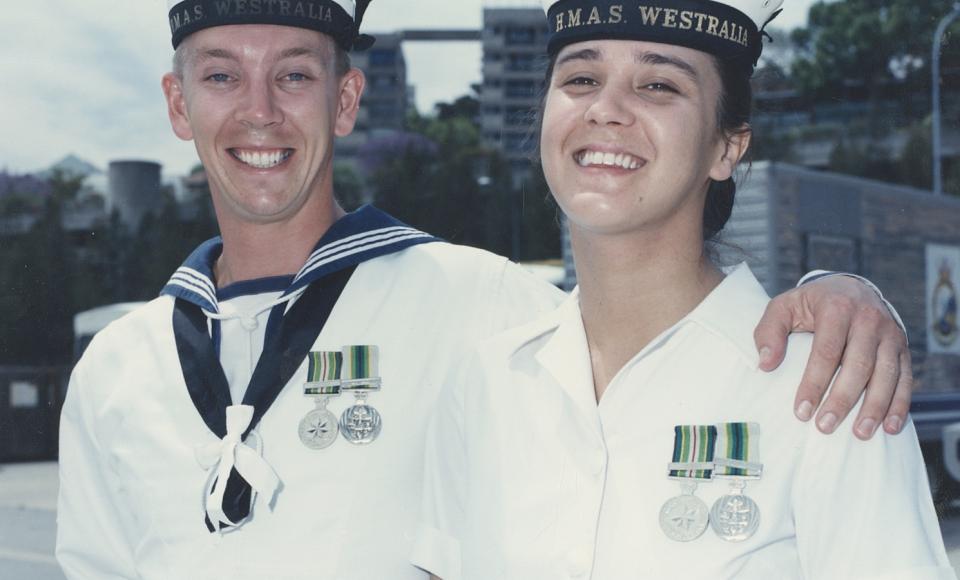
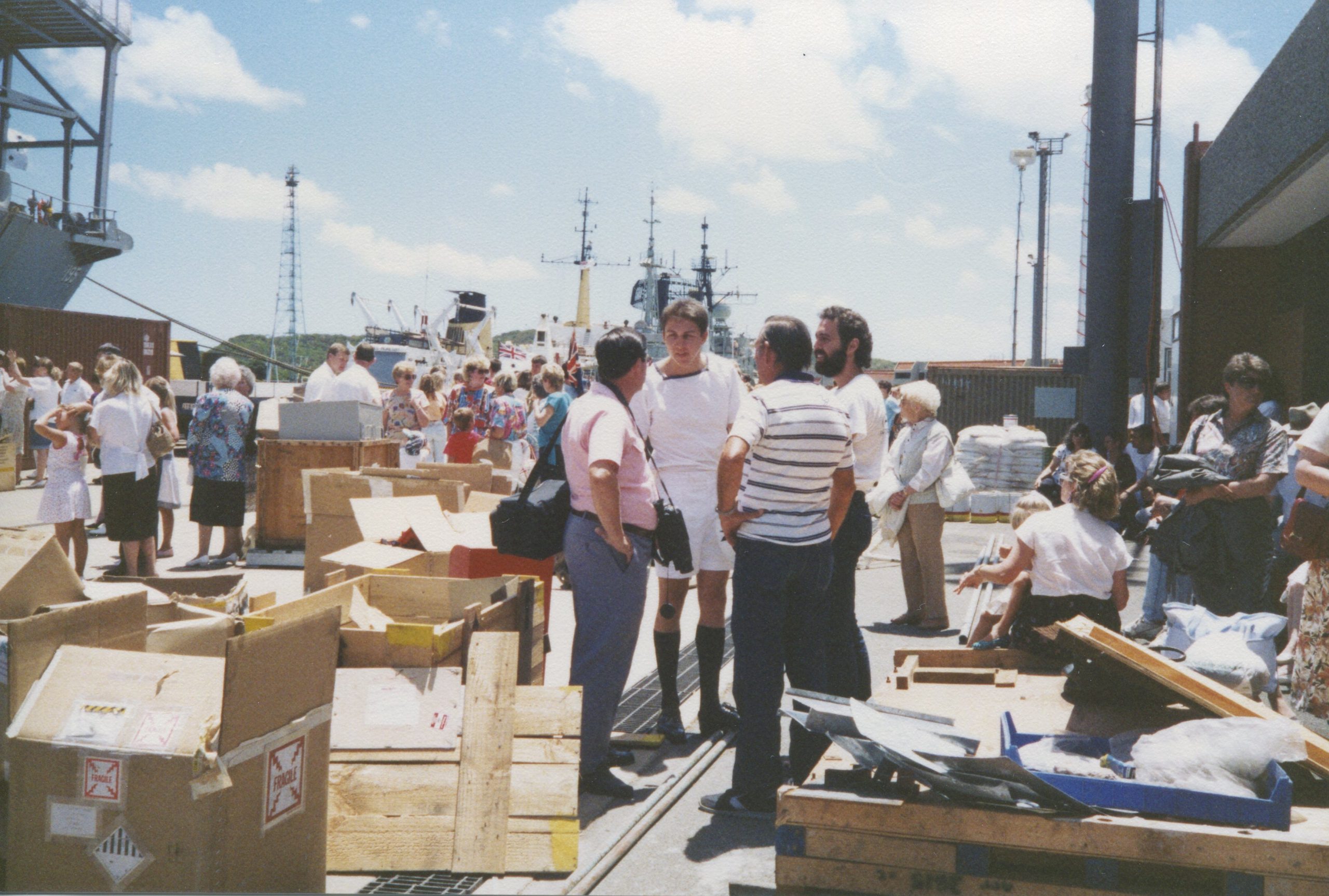
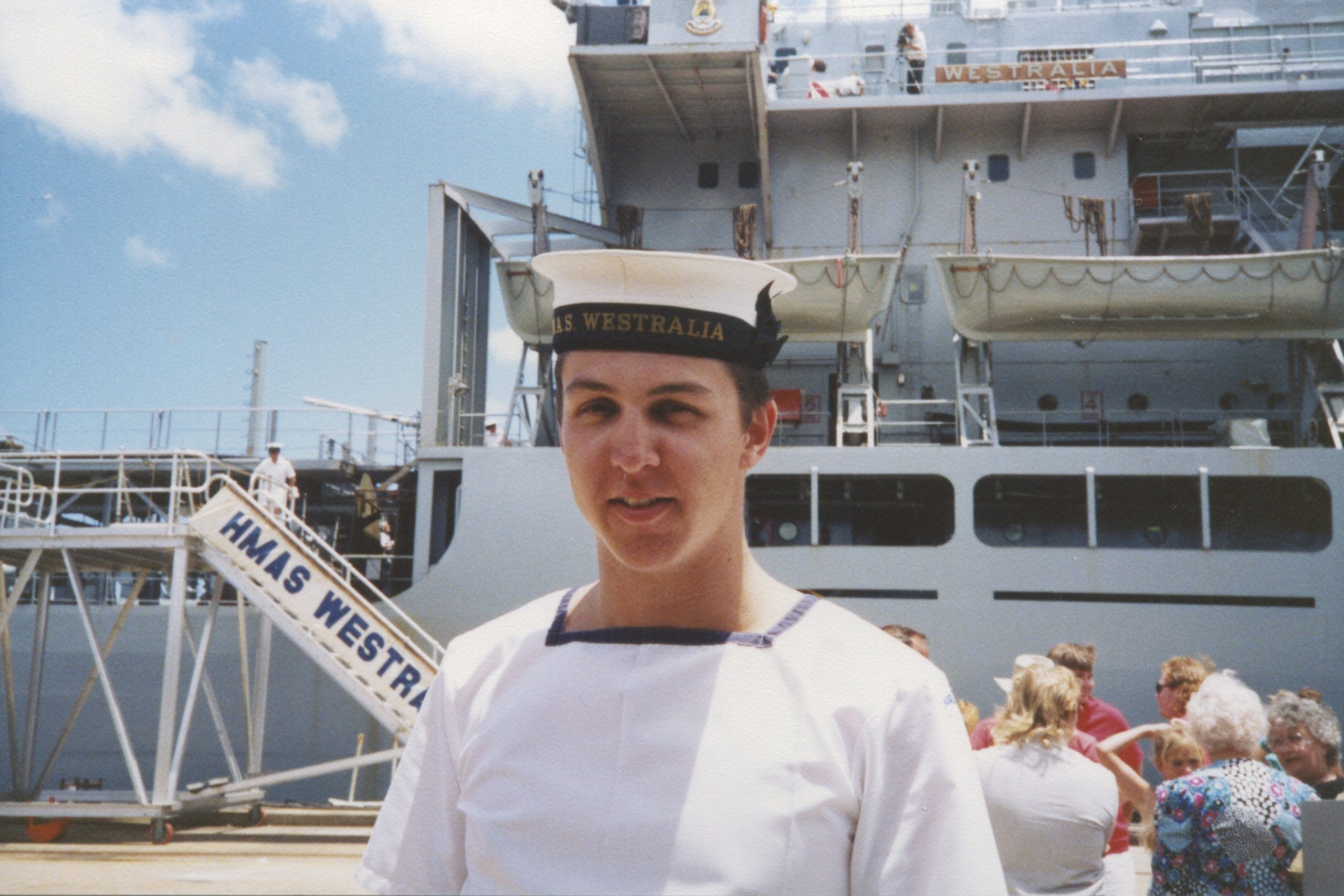
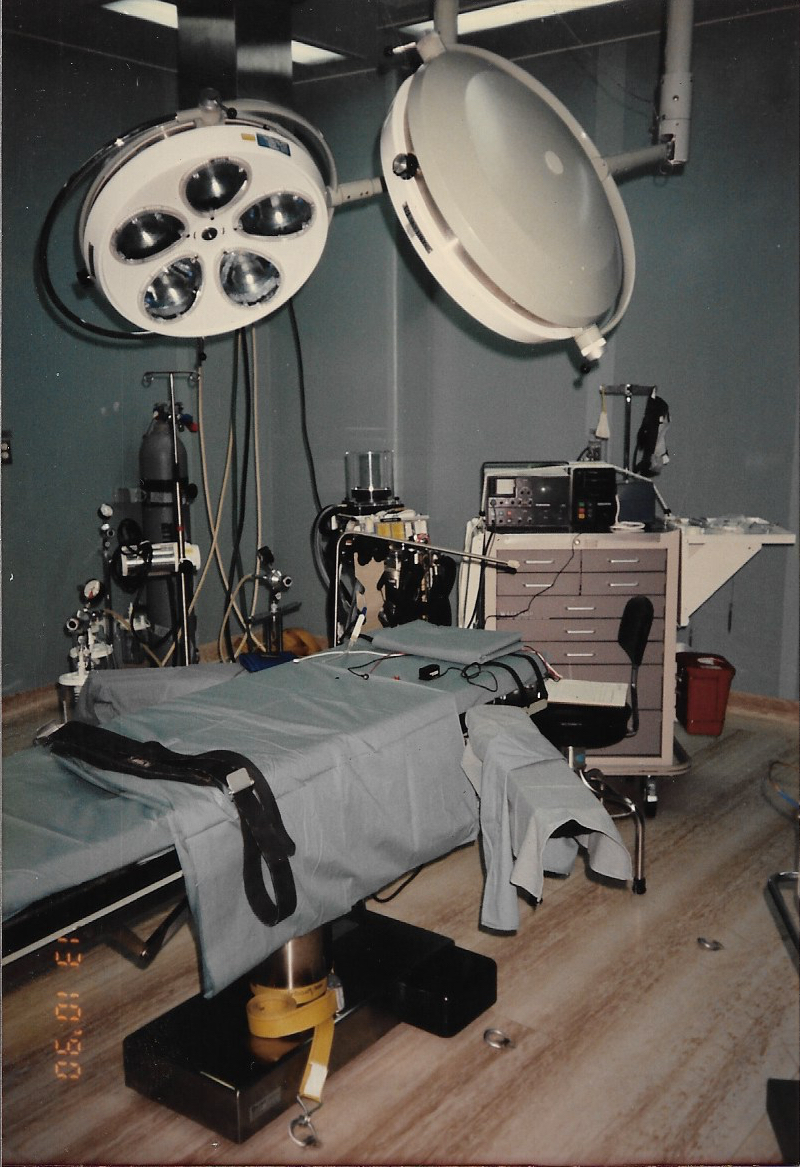
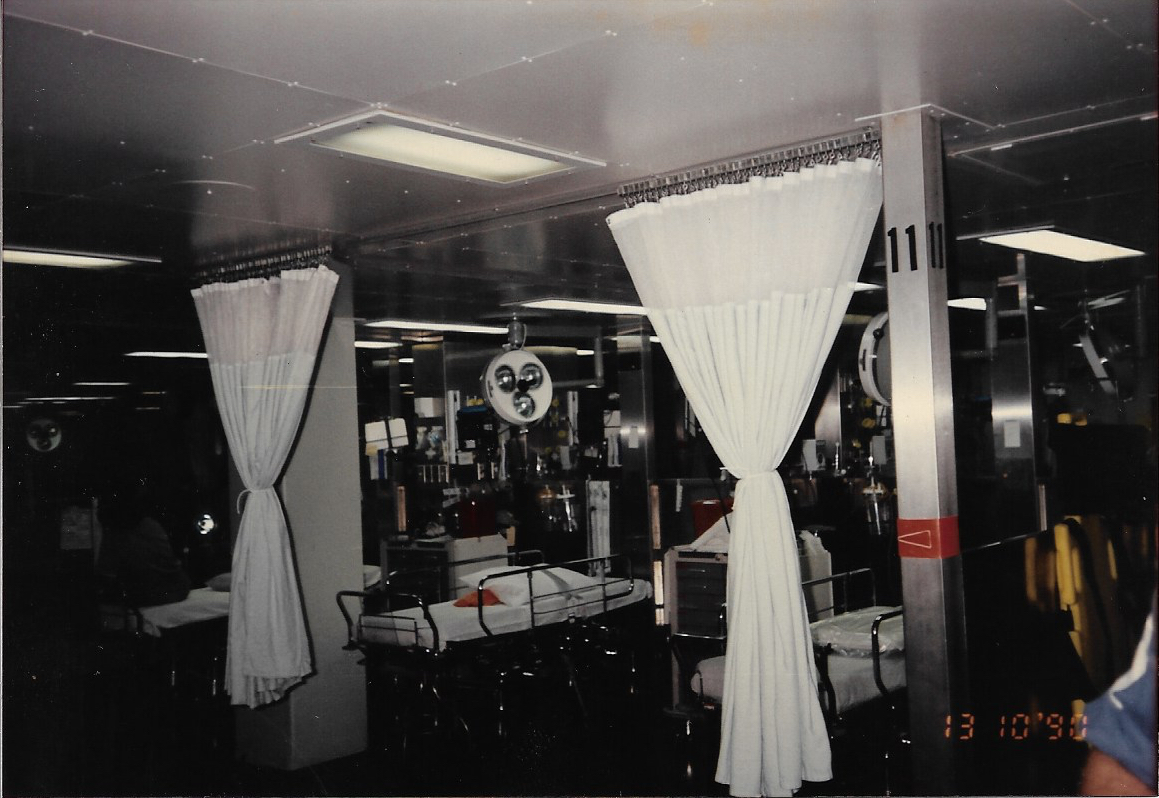
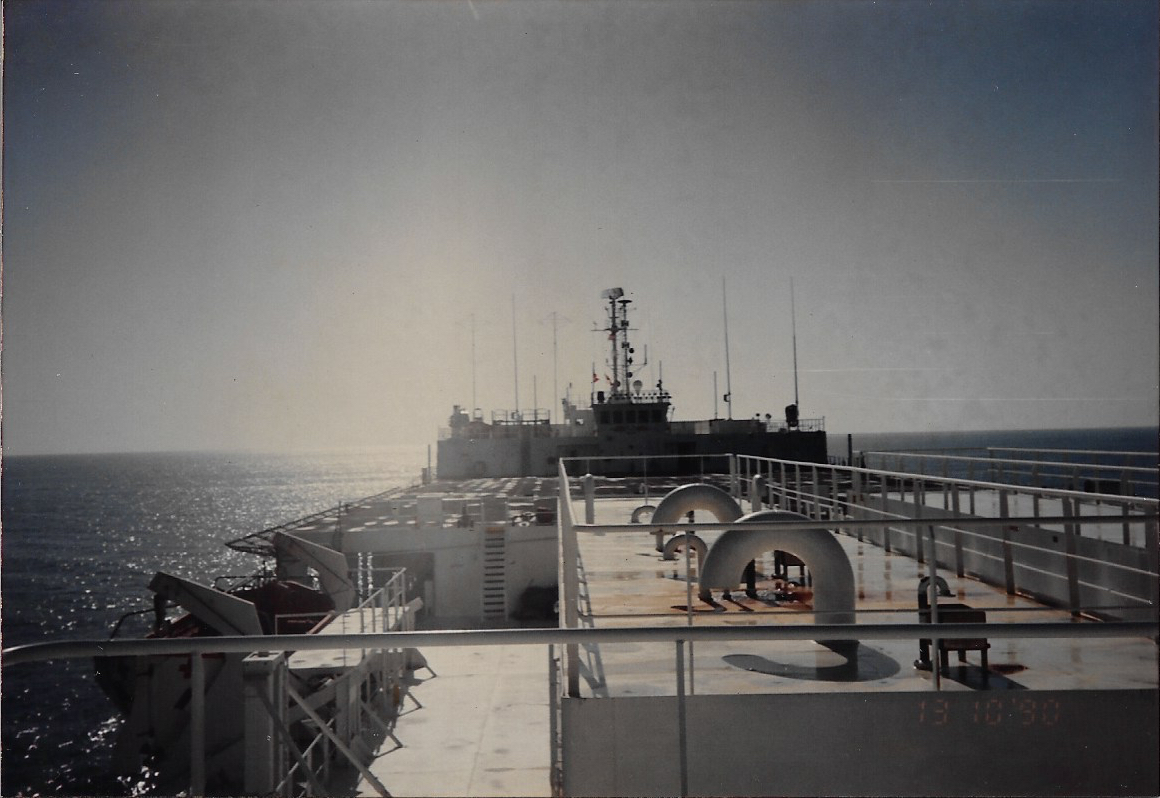
They had moved into the Persian Gulf to form part of the screen around the US aircraft carrier group, Battle Force Zulu, providing anti-aircraft and anti-ship protection, and controlling fighter air combat patrols. Success continued to provide sustainment and logistical support for Coalition vessels in Gulf of Oman until replaced by HMAS Westralia on 26 January 1991. In addition to the RAN task group, detachments from the Army's 16th Air Defence Regiment served aboard Success and Westralia, a RAN Clearance Diving Team later carried out explosive ordnance disposal in Kuwait, RAAF photo-interpreters and Defence Intelligence Organisation personnel were based in Saudi Arabia, and four ADF medical teams served aboard the US hospital ship USS Comfort. Around 20 ADF officers and NCOs were on exchange to US and British units involved in the ground war phase of Operation Desert Storm. Some 1,800 ADF personnel served during the Gulf War between August 1990 and September 1991. No deaths occurred among Australian forces, although Coalition losses amounted to 166.
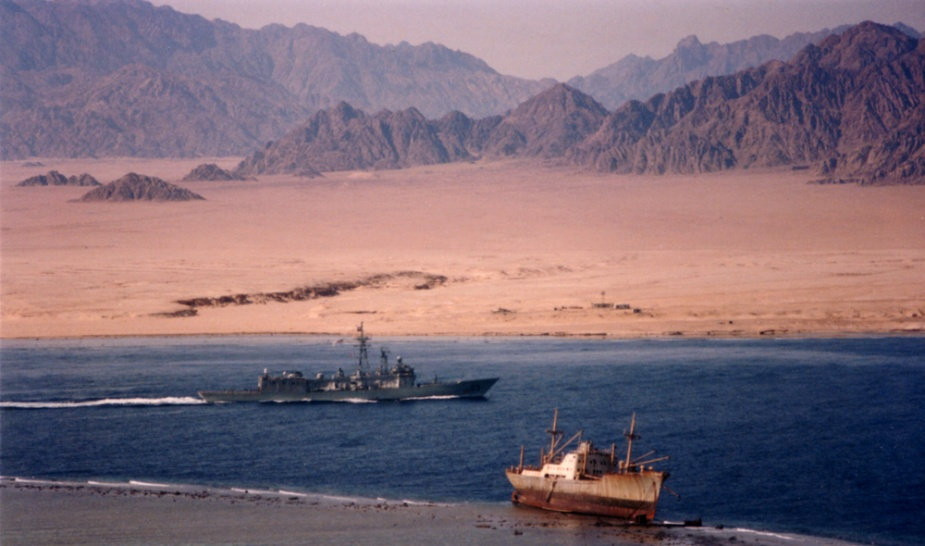
Sydney transiting the Strait of Tiran at the mouth of the Gulf of Aqaba. *** Local Caption *** HMAS Sydney (IV) was the third of six Adelaide class guided missile frigates (FFG) to commission into the Royal Australian Navy (RAN). She was built at the Todd Pacific Shipyards in Seattle, Washington, USA, and commissioned there on 29 January 1983 under the command of Commander Paul Kable, RAN. The first four FFGs, HMA Ships Adelaide (II), Canberra (II), Sydney and Darwin, were built in the USA with subsequent modifications undertaken in Australia. The last two, HMA Ships Melbourne (III) and Newcastle, were constructed in Australia with all modifications incorporated.
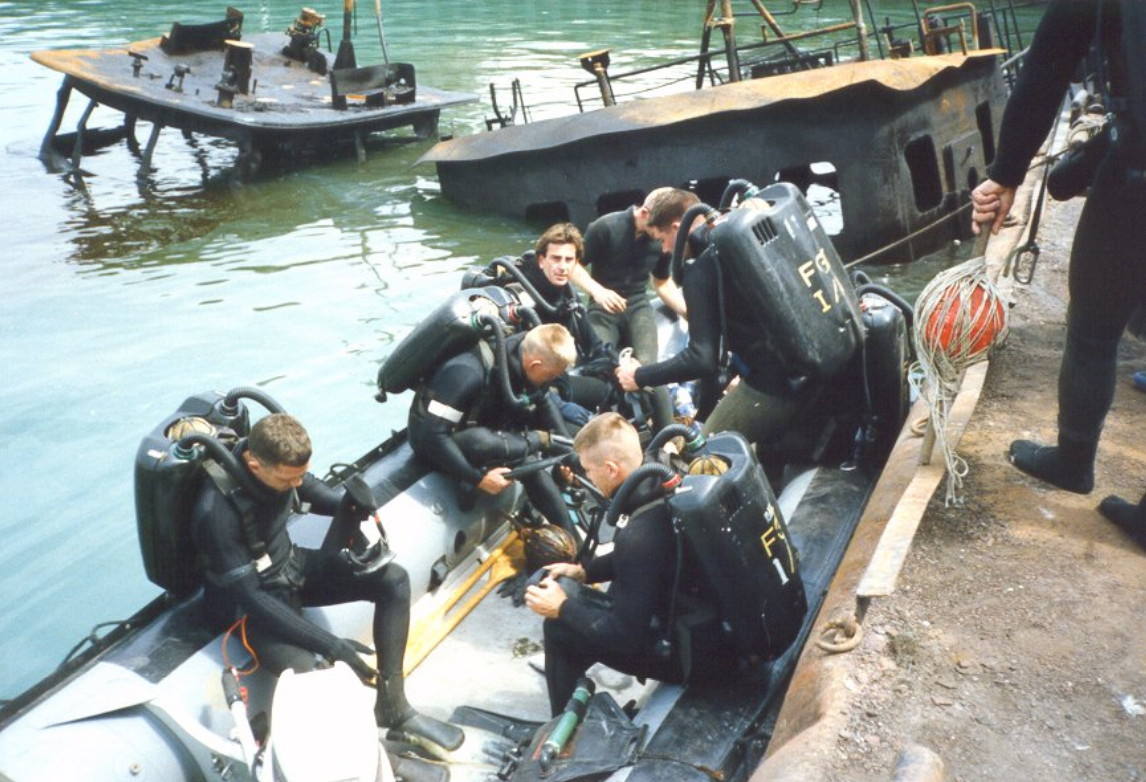
Australian Clearance Diving Team 3 prepares for a dive during Operation Damask. *** Local Caption *** On 2 August 1990 Iraq invaded its neighbour Kuwait. Four days later the UN Security Council unanimously approved a trade embargo against Iraq. The Security Council set 15 January 1991 as the deadline for an Iraqi withdrawal from Kuwait, which was ignored by Iraq. The result was a full-scale war (known as Operation Desert Storm) when Coalition forces began air strikes on Iraqi military targets in Kuwait and the Iraqi capital, Baghdad. On 24 February 1991 the Coalition moved ground forces against Iraqi positions in Kuwait. Two days later Iraqi forces began to withdraw from Kuwait, setting fire to more than 600 Kuwaiti oil wells and dumping millions of barrels of crude oil into the Persian Gulf. Iraqi forces were expelled from Kuwait, and a ceasefire declared on 28 February 1991.
The main Australian contribution to the conflict was through a three-ship RAN task force that deployed to the region in August 1990 to enforce the UN sanctions against Iraq in the Persian Gulf and neighbouring waters. Under Operation Damask the first rotation of RAN warships were the Adelaide-class guided missile frigates HMAS Adelaide (II) and Darwin (I) and the replenishment oiler HMAS Success. In December 1990 the two RAN frigates were replaced by the Perth-class guided missile destroyer HMAS Brisbane (II) and the frigate HMAS Sydney (IV) which were on-station at the commencement of Operation Desert Storm in the early hours of 17 January 1991.
They had moved into the Persian Gulf to form part of the screen around the US aircraft carrier group, Battle Force Zulu, providing anti-aircraft and anti-ship protection, and controlling fighter air combat patrols. Success continued to provide sustainment and logistical support for Coalition vessels in Gulf of Oman until replaced by HMAS Westralia on 26 January 1991. In addition to the RAN task group, detachments from the Army's 16th Air Defence Regiment served aboard Success and Westralia, a RAN Clearance Diving Team later carried out explosive ordnance disposal in Kuwait, RAAF photo-interpreters and Defence Intelligence Organisation personnel were based in Saudi Arabia, and four ADF medical teams served aboard the US hospital ship USS Comfort. Around 20 ADF officers and NCOs were on exchange to US and British units involved in the ground war phase of Operation Desert Storm. Some 1,800 ADF personnel served during the Gulf War between August 1990 and September 1991. No deaths occurred among Australian forces, although Coalition losses amounted to 166.
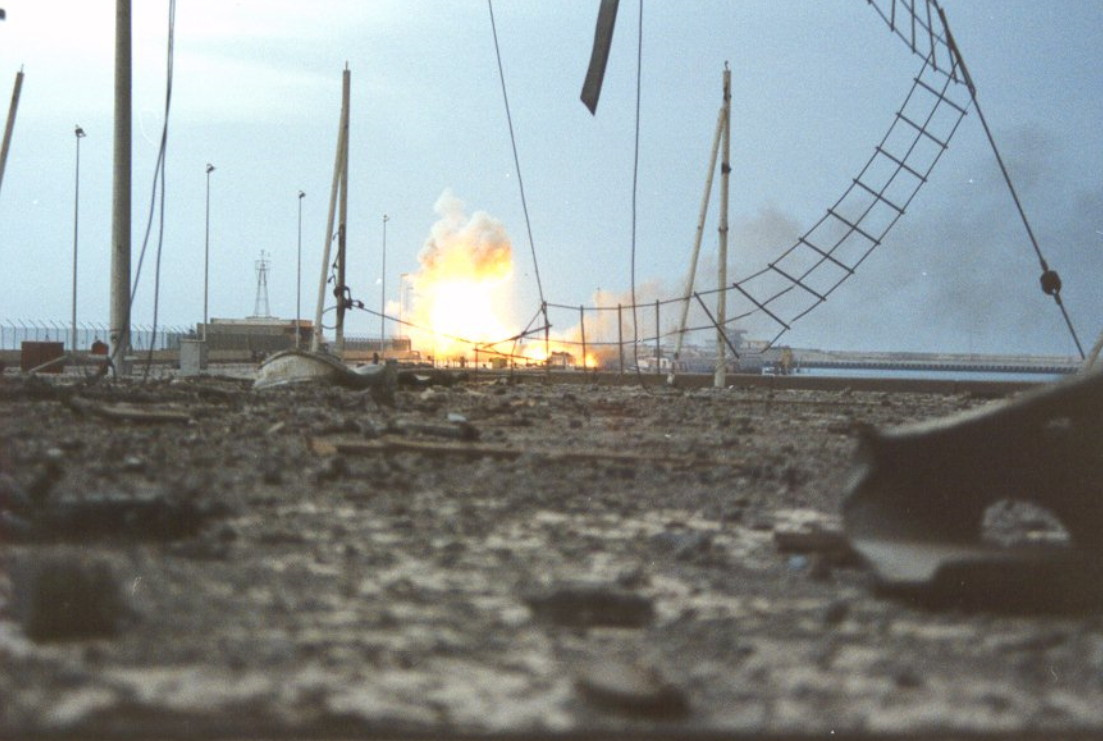
The aftermath of an explosive ordnance disposal mission during Operation Damask. *** Local Caption *** On 2 August 1990 Iraq invaded its neighbour Kuwait. Four days later the UN Security Council unanimously approved a trade embargo against Iraq. The Security Council set 15 January 1991 as the deadline for an Iraqi withdrawal from Kuwait, which was ignored by Iraq. The result was a full-scale war (known as Operation Desert Storm) when Coalition forces began air strikes on Iraqi military targets in Kuwait and the Iraqi capital, Baghdad. On 24 February 1991 the Coalition moved ground forces against Iraqi positions in Kuwait. Two days later Iraqi forces began to withdraw from Kuwait, setting fire to more than 600 Kuwaiti oil wells and dumping millions of barrels of crude oil into the Persian Gulf. Iraqi forces were expelled from Kuwait, and a ceasefire declared on 28 February 1991.
The main Australian contribution to the conflict was through a three-ship RAN task force that deployed to the region in August 1990 to enforce the UN sanctions against Iraq in the Persian Gulf and neighbouring waters. Under Operation Damask the first rotation of RAN warships were the Adelaide-class guided missile frigates HMAS Adelaide (II) and Darwin (I) and the replenishment oiler HMAS Success. In December 1990 the two RAN frigates were replaced by the Perth-class guided missile destroyer HMAS Brisbane (II) and the frigate HMAS Sydney (IV) which were on-station at the commencement of Operation Desert Storm in the early hours of 17 January 1991.
They had moved into the Persian Gulf to form part of the screen around the US aircraft carrier group, Battle Force Zulu, providing anti-aircraft and anti-ship protection, and controlling fighter air combat patrols. Success continued to provide sustainment and logistical support for Coalition vessels in Gulf of Oman until replaced by HMAS Westralia on 26 January 1991. In addition to the RAN task group, detachments from the Army's 16th Air Defence Regiment served aboard Success and Westralia, a RAN Clearance Diving Team later carried out explosive ordnance disposal in Kuwait, RAAF photo-interpreters and Defence Intelligence Organisation personnel were based in Saudi Arabia, and four ADF medical teams served aboard the US hospital ship USS Comfort. Around 20 ADF officers and NCOs were on exchange to US and British units involved in the ground war phase of Operation Desert Storm. Some 1,800 ADF personnel served during the Gulf War between August 1990 and September 1991. No deaths occurred among Australian forces, although Coalition losses amounted to 166.
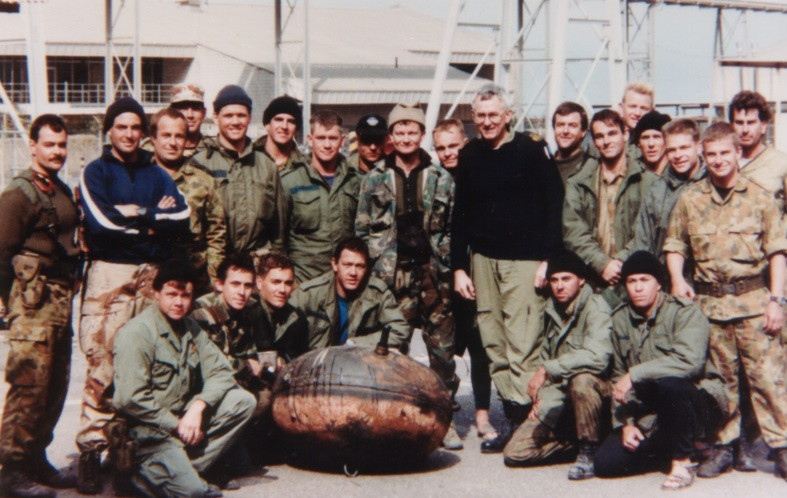
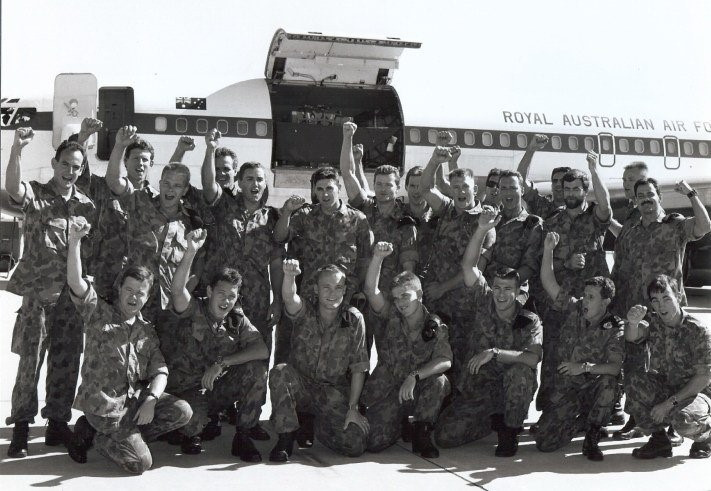
Members of Australian Clearance Diving Team 3 in Kuwait with Commodore Oxenbould (centre-right), 1991. *** Local Caption *** On 2 August 1990 Iraq invaded its neighbour Kuwait. Four days later the UN Security Council unanimously approved a trade embargo against Iraq. The Security Council set 15 January 1991 as the deadline for an Iraqi withdrawal from Kuwait, which was ignored by Iraq. The result was a full-scale war (known as Operation Desert Storm) when Coalition forces began air strikes on Iraqi military targets in Kuwait and the Iraqi capital, Baghdad. On 24 February 1991 the Coalition moved ground forces against Iraqi positions in Kuwait. Two days later Iraqi forces began to withdraw from Kuwait, setting fire to more than 600 Kuwaiti oil wells and dumping millions of barrels of crude oil into the Persian Gulf. Iraqi forces were expelled from Kuwait, and a ceasefire declared on 28 February 1991.
The main Australian contribution to the conflict was through a three-ship RAN task force that deployed to the region in August 1990 to enforce the UN sanctions against Iraq in the Persian Gulf and neighbouring waters. Under Operation Damask the first rotation of RAN warships were the Adelaide-class guided missile frigates HMAS Adelaide (II) and Darwin (I) and the replenishment oiler HMAS Success. In December 1990 the two RAN frigates were replaced by the Perth-class guided missile destroyer HMAS Brisbane (II) and the frigate HMAS Sydney (IV) which were on-station at the commencement of Operation Desert Storm in the early hours of 17 January 1991.
They had moved into the Persian Gulf to form part of the screen around the US aircraft carrier group, Battle Force Zulu, providing anti-aircraft and anti-ship protection, and controlling fighter air combat patrols. Success continued to provide sustainment and logistical support for Coalition vessels in Gulf of Oman until replaced by HMAS Westralia on 26 January 1991. In addition to the RAN task group, detachments from the Army's 16th Air Defence Regiment served aboard Success and Westralia, a RAN Clearance Diving Team later carried out explosive ordnance disposal in Kuwait, RAAF photo-interpreters and Defence Intelligence Organisation personnel were based in Saudi Arabia, and four ADF medical teams served aboard the US hospital ship USS Comfort. Around 20 ADF officers and NCOs were on exchange to US and British units involved in the ground war phase of Operation Desert Storm. Some 1,800 ADF personnel served during the Gulf War between August 1990 and September 1991. No deaths occurred among Australian forces, although Coalition losses amounted to 166.
Members of Australian Clearance Diving Team 3 on return from Operation Damask. *** Local Caption *** On 2 August 1990 Iraq invaded its neighbour Kuwait. Four days later the UN Security Council unanimously approved a trade embargo against Iraq. The Security Council set 15 January 1991 as the deadline for an Iraqi withdrawal from Kuwait, which was ignored by Iraq. The result was a full-scale war (known as Operation Desert Storm) when Coalition forces began air strikes on Iraqi military targets in Kuwait and the Iraqi capital, Baghdad. On 24 February 1991 the Coalition moved ground forces against Iraqi positions in Kuwait. Two days later Iraqi forces began to withdraw from Kuwait, setting fire to more than 600 Kuwaiti oil wells and dumping millions of barrels of crude oil into the Persian Gulf. Iraqi forces were expelled from Kuwait, and a ceasefire declared on 28 February 1991.
The main Australian contribution to the conflict was through a three-ship RAN task force that deployed to the region in August 1990 to enforce the UN sanctions against Iraq in the Persian Gulf and neighbouring waters. Under Operation Damask the first rotation of RAN warships were the Adelaide-class guided missile frigates HMAS Adelaide (II) and Darwin (I) and the replenishment oiler HMAS Success. In December 1990 the two RAN frigates were replaced by the Perth-class guided missile destroyer HMAS Brisbane (II) and the frigate HMAS Sydney (IV) which were on-station at the commencement of Operation Desert Storm in the early hours of 17 January 1991.
They had moved into the Persian Gulf to form part of the screen around the US aircraft carrier group, Battle Force Zulu, providing anti-aircraft and anti-ship protection, and controlling fighter air combat patrols. Success continued to provide sustainment and logistical support for Coalition vessels in Gulf of Oman until replaced by HMAS Westralia on 26 January 1991. In addition to the RAN task group, detachments from the Army's 16th Air Defence Regiment served aboard Success and Westralia, a RAN Clearance Diving Team later carried out explosive ordnance disposal in Kuwait, RAAF photo-interpreters and Defence Intelligence Organisation personnel were based in Saudi Arabia, and four ADF medical teams served aboard the US hospital ship USS Comfort. Around 20 ADF officers and NCOs were on exchange to US and British units involved in the ground war phase of Operation Desert Storm. Some 1,800 ADF personnel served during the Gulf War between August 1990 and September 1991. No deaths occurred among Australian forces, although Coalition losses amounted to 166.
Oil fields on fire in Kuwait during Operation Damask. *** Local Caption *** On 2 August 1990 Iraq invaded its neighbour Kuwait. Four days later the UN Security Council unanimously approved a trade embargo against Iraq. The Security Council set 15 January 1991 as the deadline for an Iraqi withdrawal from Kuwait, which was ignored by Iraq. The result was a full-scale war (known as Operation Desert Storm) when Coalition forces began air strikes on Iraqi military targets in Kuwait and the Iraqi capital, Baghdad. On 24 February 1991 the Coalition moved ground forces against Iraqi positions in Kuwait. Two days later Iraqi forces began to withdraw from Kuwait, setting fire to more than 600 Kuwaiti oil wells and dumping millions of barrels of crude oil into the Persian Gulf. Iraqi forces were expelled from Kuwait, and a ceasefire declared on 28 February 1991.
The main Australian contribution to the conflict was through a three-ship RAN task force that deployed to the region in August 1990 to enforce the UN sanctions against Iraq in the Persian Gulf and neighbouring waters. Under Operation Damask the first rotation of RAN warships were the Adelaide-class guided missile frigates HMAS Adelaide (II) and Darwin (I) and the replenishment oiler HMAS Success. In December 1990 the two RAN frigates were replaced by the Perth-class guided missile destroyer HMAS Brisbane (II) and the frigate HMAS Sydney (IV) which were on-station at the commencement of Operation Desert Storm in the early hours of 17 January 1991.
They had moved into the Persian Gulf to form part of the screen around the US aircraft carrier group, Battle Force Zulu, providing anti-aircraft and anti-ship protection, and controlling fighter air combat patrols. Success continued to provide sustainment and logistical support for Coalition vessels in Gulf of Oman until replaced by HMAS Westralia on 26 January 1991. In addition to the RAN task group, detachments from the Army's 16th Air Defence Regiment served aboard Success and Westralia, a RAN Clearance Diving Team later carried out explosive ordnance disposal in Kuwait, RAAF photo-interpreters and Defence Intelligence Organisation personnel were based in Saudi Arabia, and four ADF medical teams served aboard the US hospital ship USS Comfort. Around 20 ADF officers and NCOs were on exchange to US and British units involved in the ground war phase of Operation Desert Storm. Some 1,800 ADF personnel served during the Gulf War between August 1990 and September 1991. No deaths occurred among Australian forces, although Coalition losses amounted to 166.
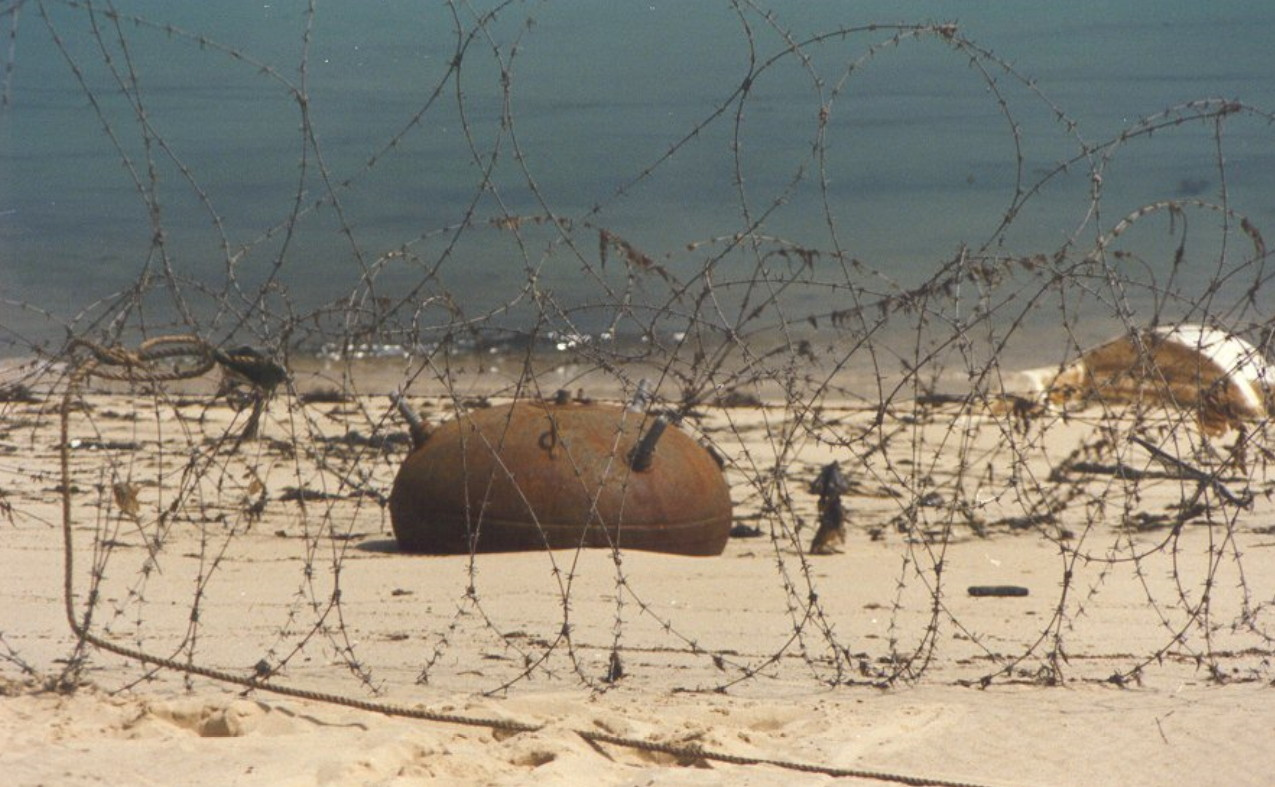
An Iraqi LUGM 145 sea mine *** Local Caption *** On 2 August 1990 Iraq invaded its neighbour Kuwait. Four days later the UN Security Council unanimously approved a trade embargo against Iraq. The Security Council set 15 January 1991 as the deadline for an Iraqi withdrawal from Kuwait, which was ignored by Iraq. The result was a full-scale war (known as Operation Desert Storm) when Coalition forces began air strikes on Iraqi military targets in Kuwait and the Iraqi capital, Baghdad. On 24 February 1991 the Coalition moved ground forces against Iraqi positions in Kuwait. Two days later Iraqi forces began to withdraw from Kuwait, setting fire to more than 600 Kuwaiti oil wells and dumping millions of barrels of crude oil into the Persian Gulf. Iraqi forces were expelled from Kuwait, and a ceasefire declared on 28 February 1991.
The main Australian contribution to the conflict was through a three-ship RAN task force that deployed to the region in August 1990 to enforce the UN sanctions against Iraq in the Persian Gulf and neighbouring waters. Under Operation Damask the first rotation of RAN warships were the Adelaide-class guided missile frigates HMAS Adelaide (II) and Darwin (I) and the replenishment oiler HMAS Success. In December 1990 the two RAN frigates were replaced by the Perth-class guided missile destroyer HMAS Brisbane (II) and the frigate HMAS Sydney (IV) which were on-station at the commencement of Operation Desert Storm in the early hours of 17 January 1991.
They had moved into the Persian Gulf to form part of the screen around the US aircraft carrier group, Battle Force Zulu, providing anti-aircraft and anti-ship protection, and controlling fighter air combat patrols. Success continued to provide sustainment and logistical support for Coalition vessels in Gulf of Oman until replaced by HMAS Westralia on 26 January 1991. In addition to the RAN task group, detachments from the Army's 16th Air Defence Regiment served aboard Success and Westralia, a RAN Clearance Diving Team later carried out explosive ordnance disposal in Kuwait, RAAF photo-interpreters and Defence Intelligence Organisation personnel were based in Saudi Arabia, and four ADF medical teams served aboard the US hospital ship USS Comfort. Around 20 ADF officers and NCOs were on exchange to US and British units involved in the ground war phase of Operation Desert Storm. Some 1,800 ADF personnel served during the Gulf War between August 1990 and September 1991. No deaths occurred among Australian forces, although Coalition losses amounted to 166.
An explosive ordnance disposal mission during Operation Damask. *** Local Caption *** On 2 August 1990 Iraq invaded its neighbour Kuwait. Four days later the UN Security Council unanimously approved a trade embargo against Iraq. The Security Council set 15 January 1991 as the deadline for an Iraqi withdrawal from Kuwait, which was ignored by Iraq. The result was a full-scale war (known as Operation Desert Storm) when Coalition forces began air strikes on Iraqi military targets in Kuwait and the Iraqi capital, Baghdad. On 24 February 1991 the Coalition moved ground forces against Iraqi positions in Kuwait. Two days later Iraqi forces began to withdraw from Kuwait, setting fire to more than 600 Kuwaiti oil wells and dumping millions of barrels of crude oil into the Persian Gulf. Iraqi forces were expelled from Kuwait, and a ceasefire declared on 28 February 1991.
The main Australian contribution to the conflict was through a three-ship RAN task force that deployed to the region in August 1990 to enforce the UN sanctions against Iraq in the Persian Gulf and neighbouring waters. Under Operation Damask the first rotation of RAN warships were the Adelaide-class guided missile frigates HMAS Adelaide (II) and Darwin (I) and the replenishment oiler HMAS Success. In December 1990 the two RAN frigates were replaced by the Perth-class guided missile destroyer HMAS Brisbane (II) and the frigate HMAS Sydney (IV) which were on-station at the commencement of Operation Desert Storm in the early hours of 17 January 1991.
They had moved into the Persian Gulf to form part of the screen around the US aircraft carrier group, Battle Force Zulu, providing anti-aircraft and anti-ship protection, and controlling fighter air combat patrols. Success continued to provide sustainment and logistical support for Coalition vessels in Gulf of Oman until replaced by HMAS Westralia on 26 January 1991. In addition to the RAN task group, detachments from the Army's 16th Air Defence Regiment served aboard Success and Westralia, a RAN Clearance Diving Team later carried out explosive ordnance disposal in Kuwait, RAAF photo-interpreters and Defence Intelligence Organisation personnel were based in Saudi Arabia, and four ADF medical teams served aboard the US hospital ship USS Comfort. Around 20 ADF officers and NCOs were on exchange to US and British units involved in the ground war phase of Operation Desert Storm. Some 1,800 ADF personnel served during the Gulf War between August 1990 and September 1991. No deaths occurred among Australian forces, although Coalition losses amounted to 166.
Image courtesy of the Department of Defence / Defence Image Gallery
Contribute
Share your photos
Have photos from your deployment, a reunion or a commemoration? Send them in and help us tell the story
of Australians in the Gulf. Our team checks every photo before it's added to the gallery.